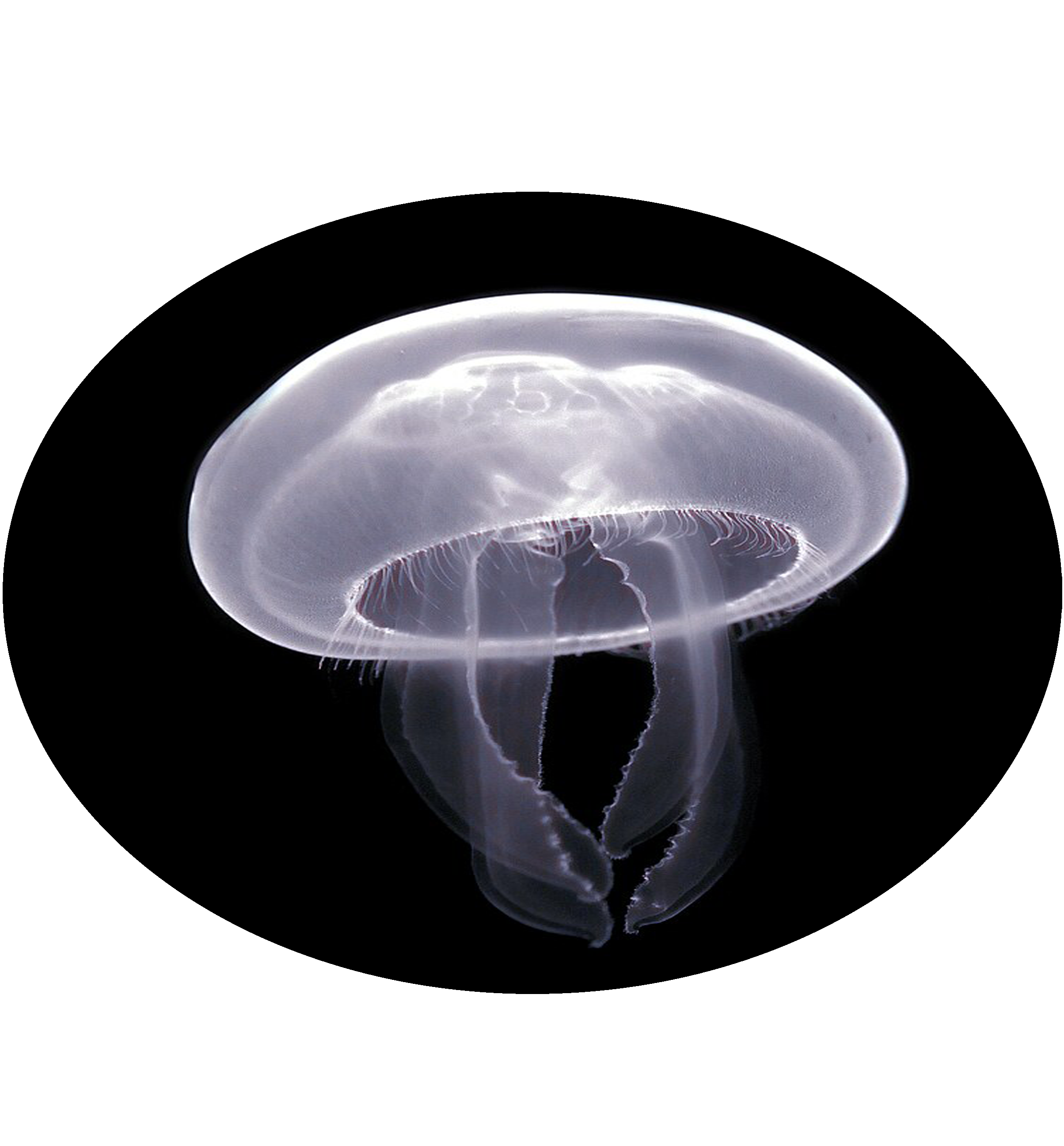
Aurelia aurita, the moon jellyfish (class Scyphozoa, order Semaeostomeae), is perhaps the most cosmopolitan and recognizable jellyfish in the world, with a translucent bell reaching up to 40 cm in diameter and four characteristic horseshoe-shaped gonads visible through the bell. The species has a complex life cycle alternating between a sessile polyp (strobila) stage and a free-swimming medusa, with blooms increasingly reported in eutrophied coastal waters globally. Genome resources have been published for multiple populations, contributing to understanding the molecular basis of its remarkable regenerative capacity and life cycle transitions. It is widely studied as a model for jellyfish bloom ecology and cnidarian developmental biology.