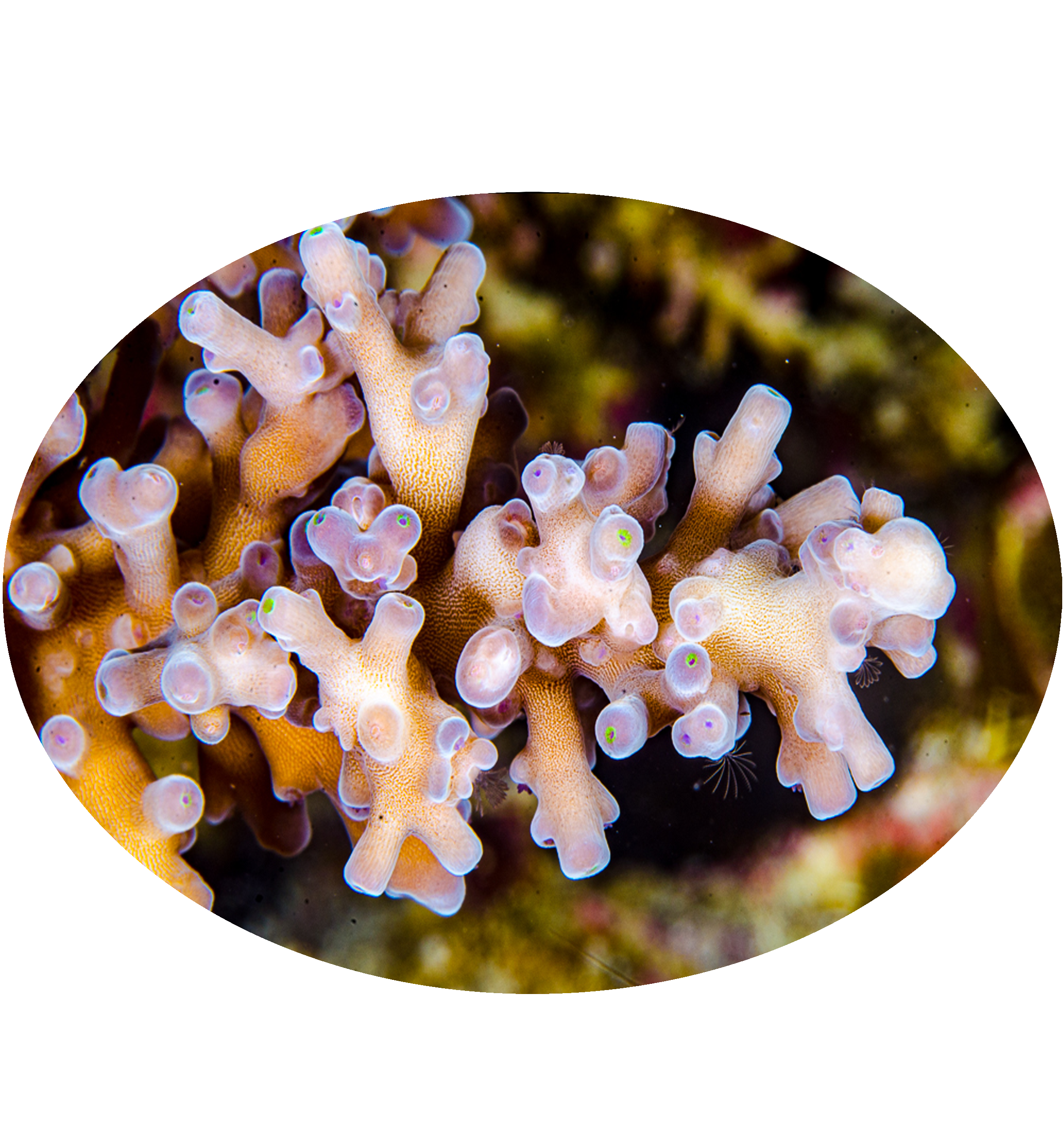
Its colonies form thin, tapering axial and radial corallites characteristic of the corymbose growth group in shallow reef habitats. The species relies on photosymbiosis with Symbiodiniaceae and faces significant threats from bleaching and climate change. Scaffold-level genomic resources for A. It is listed as Vulnerable by the IUCN.
| Class | Species | NCBI Taxonomy ID | Assembly Level | GenBank Assembly | Assembly Name | Genome Size (Mb) | WGS Accession | Submitter | BioProject |
|---|---|---|---|---|---|---|---|---|---|
| Hexacorallia | Acropora awi | 1929007 | Scaffold | GCA_014634005.1 | Aawi_1.0 | 408.98 | BLFA01 | Atmosphere and Ocean Research Institute, The University of Tokyo | PRJDB8519 |
| Chromosome Number | Scaffold Number | Contig Number | Protein Number | Protein-Coding Gene Number | Contig N50 | Scaffold N50 | GC content (%) | BUSCO completeness |
|---|---|---|---|---|---|---|---|---|
| - | 2821 | 33940 | 22,491 | 22,491 | 22742 | 1089856 | 39 | C:94.5%[S:94.1%,D:0.4%],F:4.1%,M:1.5% |
| Title | Journal | Pubmed ID |
|---|---|---|
| Corrigendum to: Eighteen Coral Genomes Reveal the Evolutionary Origin of Acropora Strategies to Accommodate Environmental Changes | Molecular Biology and Evolution | 34151991 |