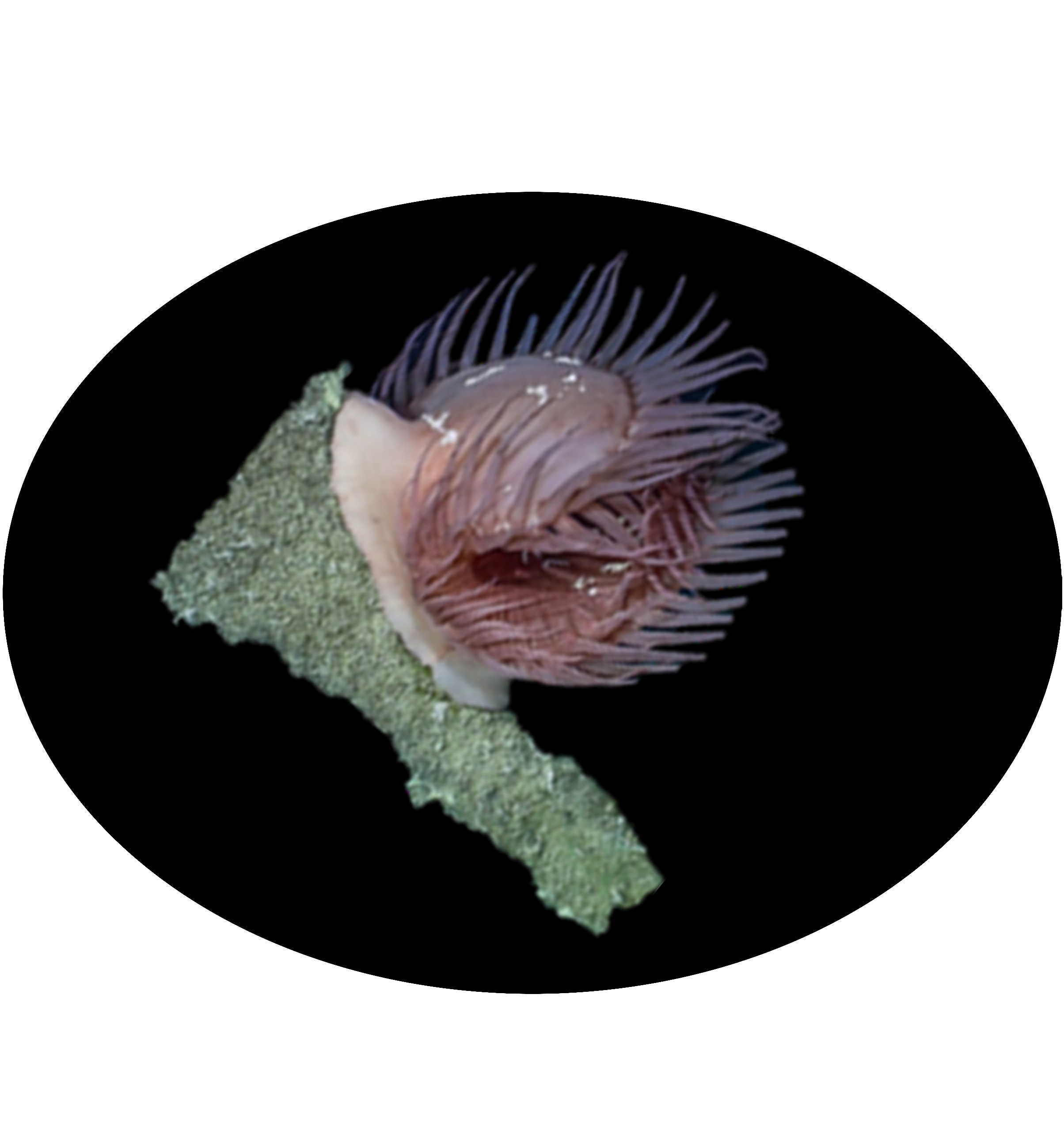
Actinoscyphia liui is a deep-sea sea anemone (family Actinoscyphiidae) described from deep-water environments in the western Pacific. Like other Actinoscyphia species, it is a large, solitary polyp with a broad oral disc and robust tentacles adapted to capturing prey including crustaceans and fish in low-food deep-sea environments. It is one of the few deep-sea anemone species with available genomic data, important for understanding molecular adaptations to extreme environments.
| Class | Species | NCBI Taxonomy ID | Assembly Level | GenBank Assembly | Assembly Name | Genome Size (Mb) | WGS Accession | Submitter | BioProject |
|---|---|---|---|---|---|---|---|---|---|
| Hexacorallia | Actinoscyphia liui | 3256304 | Scaffold | GCA_041296415.1 | ASM4129641v1 | 497.6 | JALNPV01 | Institute of Oceanology of the Chinese Academy of Sciences | PRJNA817838 |
| Chromosome Number | Scaffold Number | Contig Number | Protein Number | Protein-Coding Gene Number | Contig N50 | Scaffold N50 | GC content (%) | BUSCO completeness |
|---|---|---|---|---|---|---|---|---|
| 11 | 131 | 381 | 33,126 | 33,126 | 3416085 | 58422497 | 38 | 94.70% |
| Title | Journal | Pubmed ID |
|---|---|---|
| Chromosome-level genome assembly of a deep-sea Venus flytrap sea anemone sheds light upon adaptations to an extremely oligotrophic environment. | Molecular ecology | 39166453 |