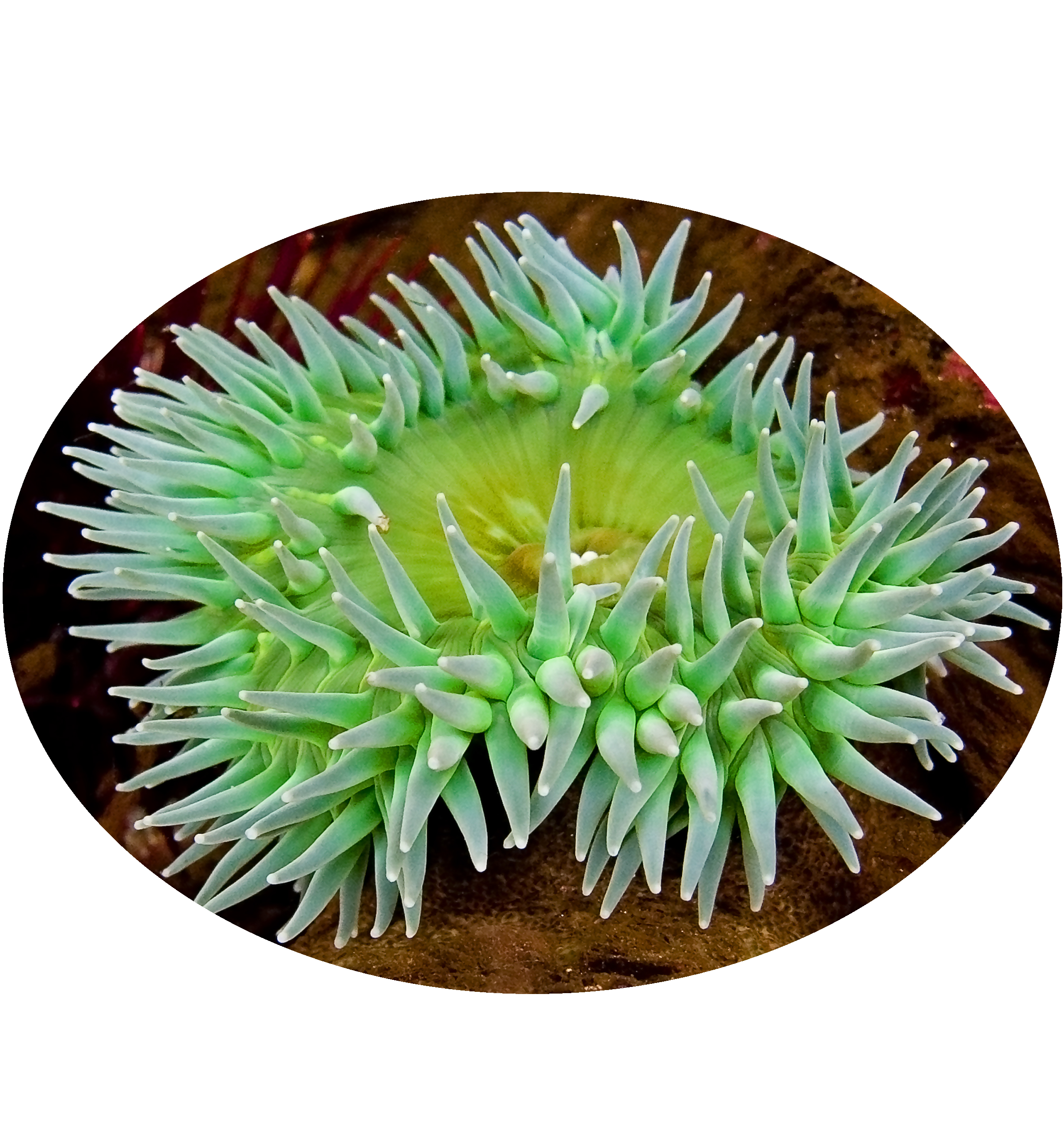
Anthopleura xanthogrammica, the giant green anemone, is one of the largest sea anemones on the Pacific coast of North America, with oral discs reaching up to 25 cm in diameter. It inhabits wave-exposed rocky intertidal and subtidal environments from Alaska to Panama, typically in crevices or tidepools with strong water circulation. Its brilliant green coloration results from endosymbiotic zoochlorellae and zooxanthellae that contribute photosynthate to the anemone's nutrition. This species plays a significant ecological role as a predator of mussels, sea urchins, and small fish in intertidal communities. Genomic data have been generated for this species and are available in public databases, enabling comparative studies of cnidarian evolution and ecology.