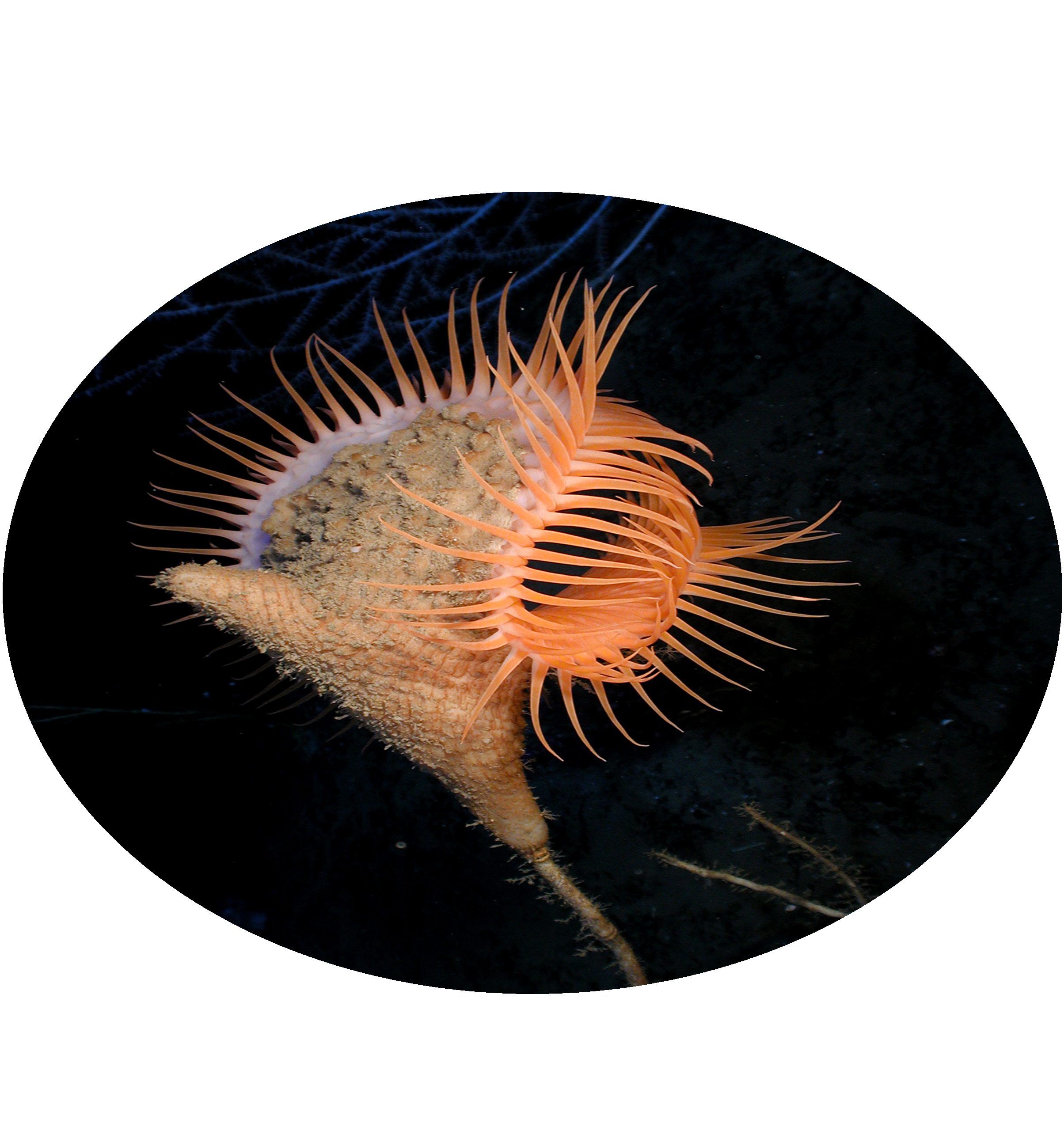
Actinoscyphia sp. M1220 is an unclassified deep-sea box-headed or Venus flytrap sea anemone (family Actinoscyphiidae) primarily found in bathyal and abyssal benthic habitats of the world's oceans. Characterized by a thick, carnified column and a unique bilobed oral disc fringed with numerous short, capitate tentacles, this suspension-feeding cnidarian exhibits a distinct predatory morphology mimicking a Venus flytrap. The species utilizes an active closure mechanism: when macro-organic debris or small motile invertebrates trigger the specialized nematocysts on its tentacles, the oral disc rapidly folds inward along a central axis to trap and digest the prey. Genomic and molecular barcoding data for this specific operational taxonomic unit (OTU) are actively maintained in public databases like NCBI, serving as crucial reference points for exploring deep-sea cnidarian biodiversity, evolutionary adaptation to extreme pressure, and benthic community ecology.