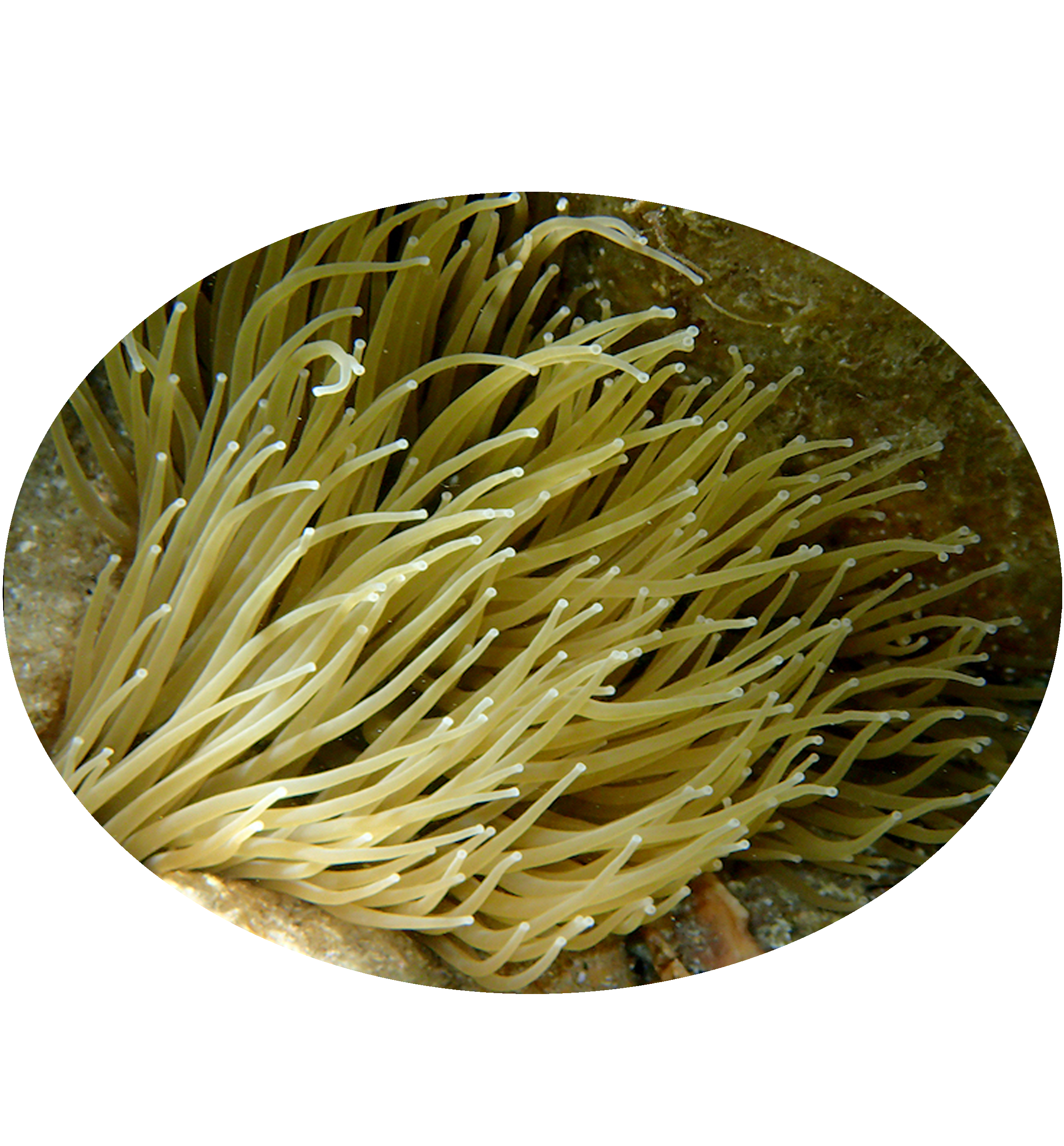
Anemonia sulcata is a large sea anemone (family Actiniidae) common in the Mediterranean Sea and eastern Atlantic, characterized by long, waving tentacles typically displaying green coloration due to endosymbiotic zooxanthellae (Symbiodiniaceae) providing photosynthetic nutrition in shallow, well-lit environments. The species produces a variety of bioactive proteins including toxins, GFP-like fluorescent proteins, and antimicrobial peptides, making it valuable for biotechnological applications. Genomic data have been generated for this species and are available in public databases, enabling comparative studies of cnidarian evolution and ecology.