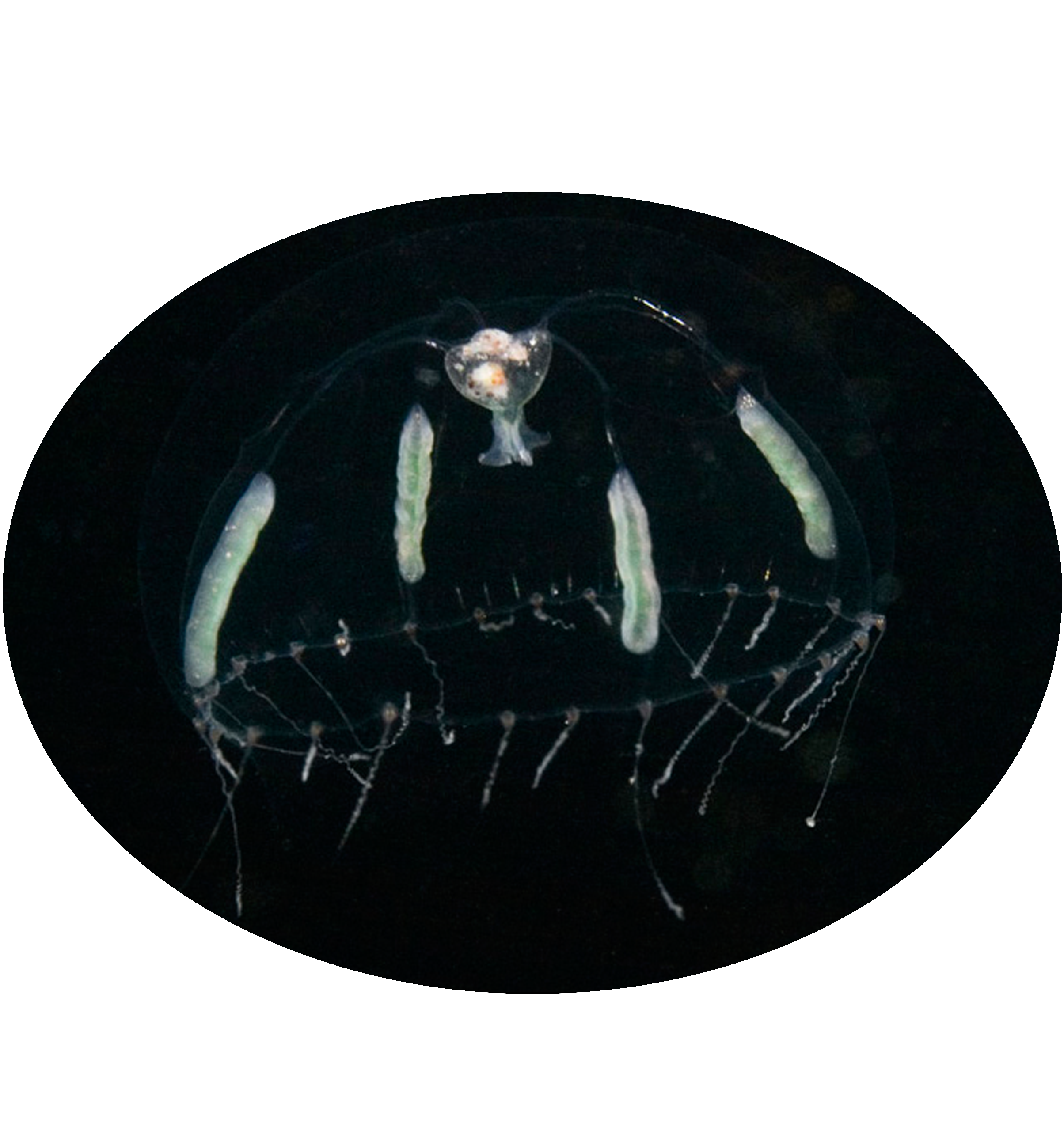
Clytia hemisphaerica is an established model organism for hydrozoan biology (family Campanulariidae) distributed in temperate coastal seas worldwide, with a well-characterized life cycle alternating between a colonial branching hydroid stage and free-swimming, transparent medusae that produce eggs and sperm for sexual reproduction. The species is highly amenable to laboratory cultivation and genetic manipulation, making it one of the key models for studying cell differentiation, regeneration, and gametogenesis in cnidarians. The Clytia genome was the first hydrozoan genome published with full annotation (2020, Institut de la Mer de Villefranche). Its photoreceptor biology, circadian clock, and stem cell biology have been extensively characterized.