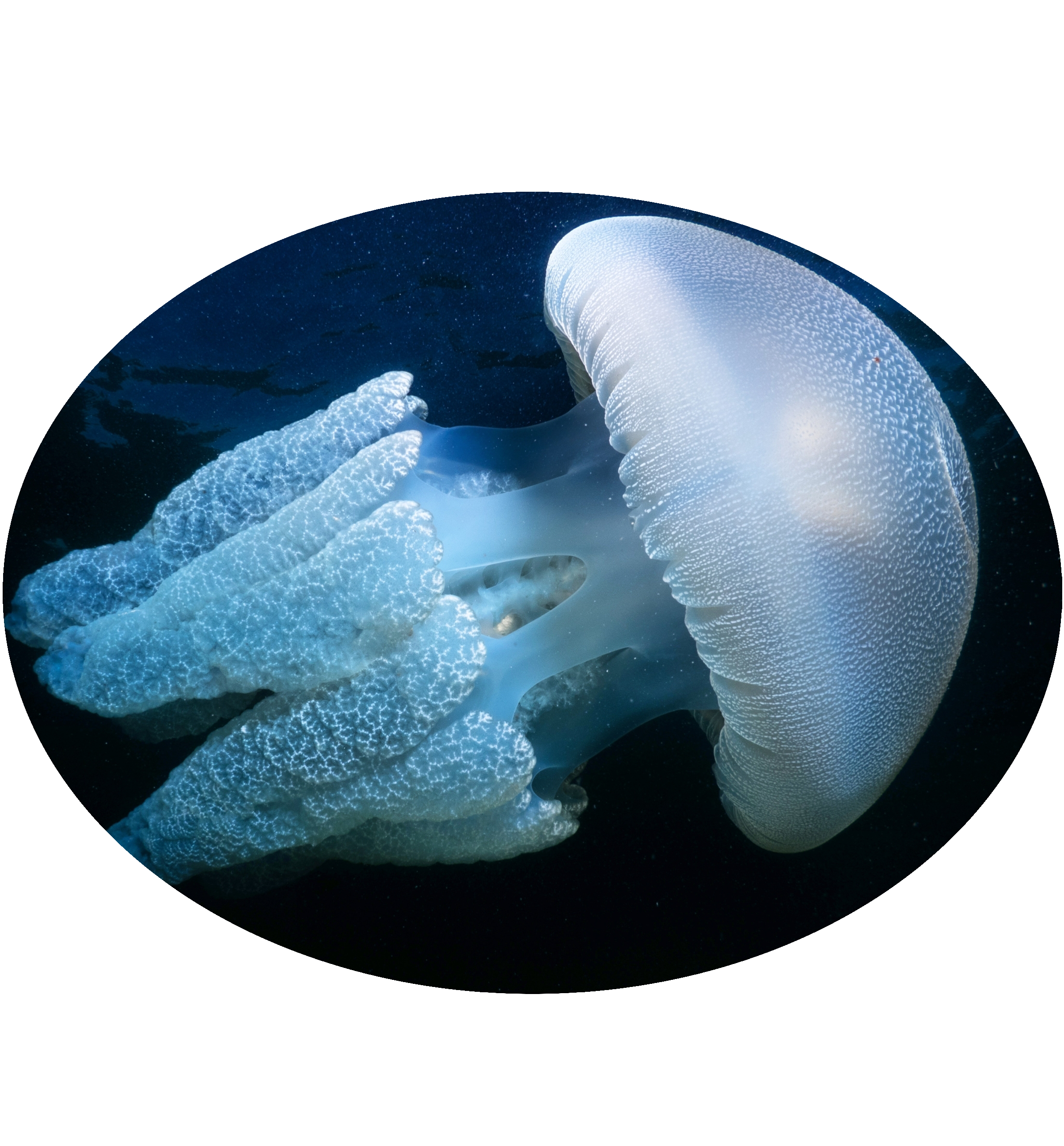
Catostylus mosaicus, the blubber jellyfish, is the most common and largest scyphozoan jellyfish in Australian coastal waters (order Rhizostomeae), with a bell reaching 35 cm in diameter varying in color from blue to brown to white depending on Symbiodiniaceae content. Unlike many jellyfish, it lacks marginal tentacles and instead uses eight highly branched oral arms for capturing plankton, forming enormous blooms in estuaries and harbors along the east coast of Australia with significant impacts on aquaculture and coastal fisheries. Genomic data have been generated for this species and are available in public databases, enabling comparative studies of cnidarian evolution and ecology.