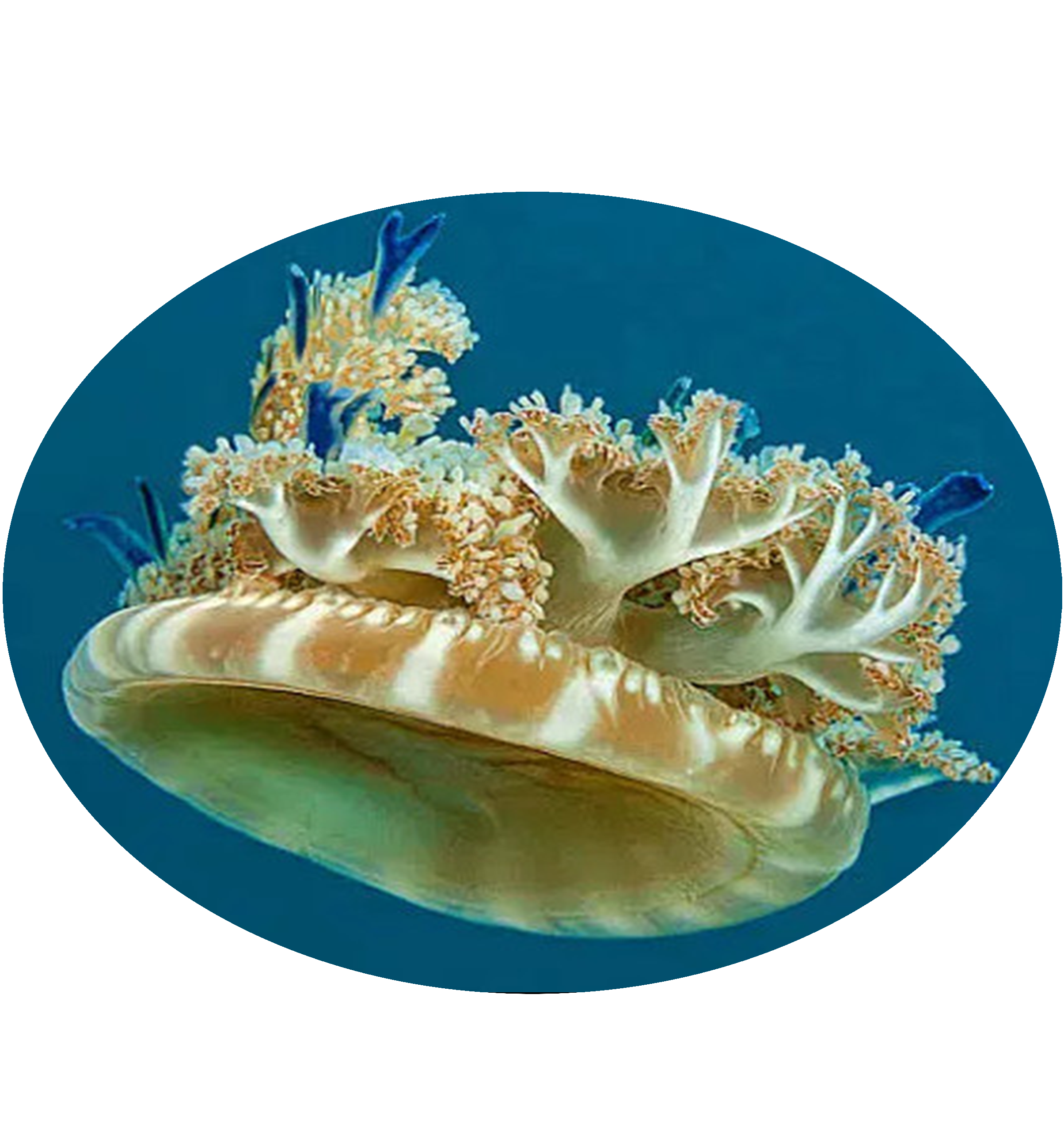
Cassiopea xamachana is a scyphozoan jellyfish (family Cassiopeidae) distributed in shallow, warm-water lagoons and mangrove habitats of the Caribbean Sea and Gulf of Mexico. It is one of the best-studied Cassiopea species, providing a key model for investigating cnidarian photosymbiosis because its medusae can be experimentally cured of Symbiodiniaceae and then re-infected, enabling controlled studies of symbiosis onset, breakdown, and specificity. The species reproduces both sexually and asexually, with polyps undergoing strobilation to produce juvenile medusae. Genomic data have been generated for this species and are available in public databases, enabling comparative studies of cnidarian evolution and ecology.