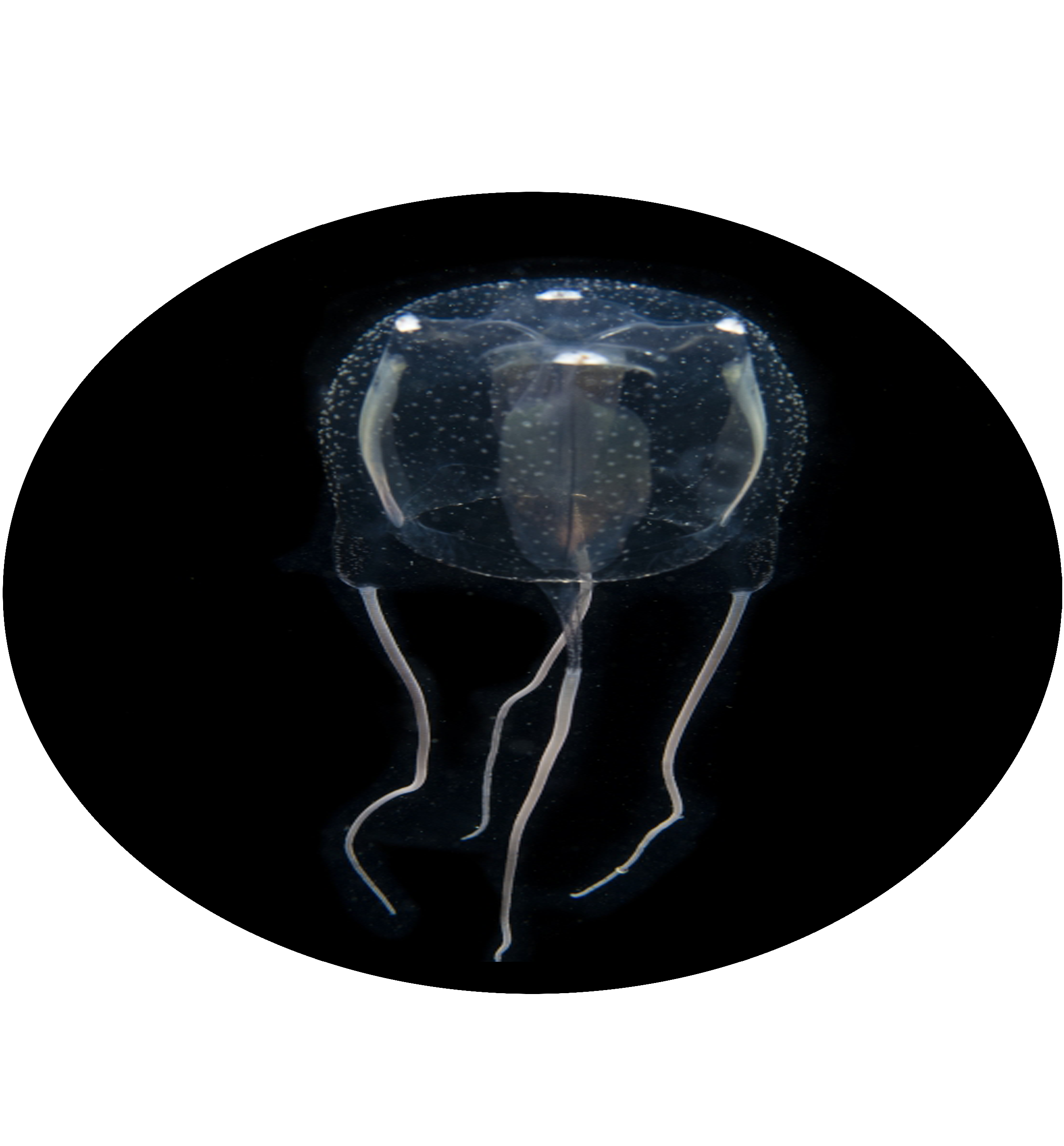
Carybdea cf. marsupialis auct. non (Linnaeus, 1758) exhibits a highly specialized morphological architecture tailored to its specific ecological niche. Macromorphologically, the adult specimen is characterized by a triannulate or segmented body plan, demonstrating bilateral symmetry with distinct anterior-posterior polarization. The outermost integument is composed of a chitinous or sclerotized cuticle, providing mechanical rigidity while simultaneously serving as a primary barrier against desiccation and environmental stressors. Anatomically, the locomotive apparatus consists of paired, jointed appendages articulating with the ventrolateral margins of the main trunk, which are heavily invested with sensory sensilla or tactile setae for environmental reception. At the microscopic level, histological examination reveals a pseudostratified epithelial layer resting upon a well-defined basement membrane, interspersed with glandular cells responsible for mucilage or biochemical secretion. Ultramorphologically, the cellular matrix is densely populated with elongated mitochondria and an extensive reticular network, reflecting an elevated metabolic capacity driving active physiological transduction.