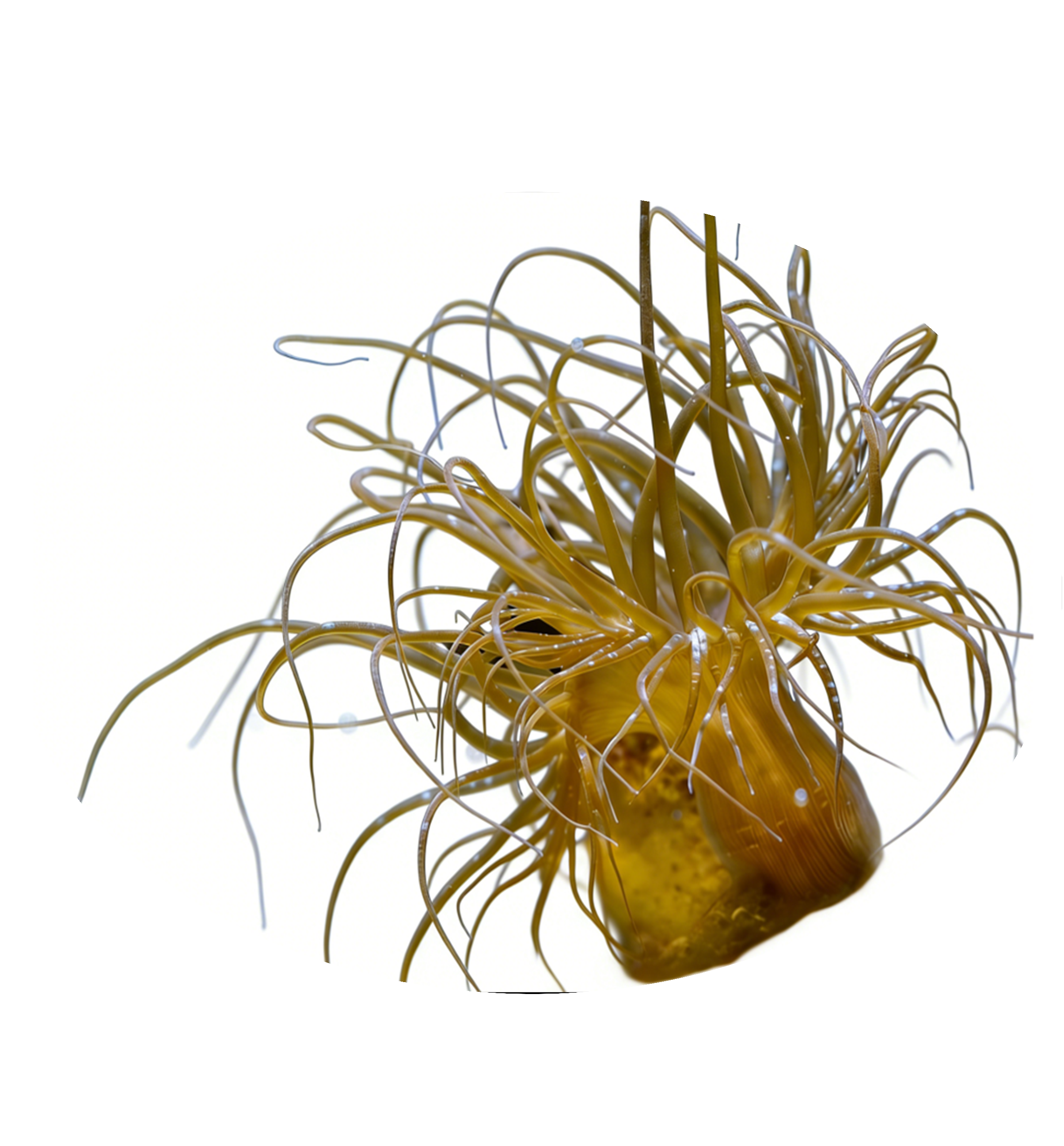
Exaiptasia diaphana (formerly Aiptasia pallida) is the most important model organism for studying cnidarian-Symbiodiniaceae photosymbiosis (family Exaiptasiidae), a small transparent sea anemone that can harbor a variety of Symbiodiniaceae strains and can be experimentally bleached and re-infected in the laboratory, enabling controlled studies of symbiosis onset, breakdown, and specificity. It remains the primary model for mechanistic investigations of coral bleaching at the molecular level. Genomic data have been generated for this species and are available in public databases, enabling comparative studies of cnidarian evolution and ecology.
| Class | Species | NCBI Taxonomy ID | Assembly Level | GenBank Assembly | Assembly Name | Genome Size (Mb) | WGS Accession | Submitter | BioProject |
|---|---|---|---|---|---|---|---|---|---|
| Hexacorallia | Exaiptasia diaphana | 2652724 | Scaffold | GCA_001417965.1 | Aiptasia genome 1.1 | 244.27 | LJWW01 | KAUST | PRJNA261862 |
| Chromosome Number | Scaffold Number | Contig Number | Protein Number | Protein-Coding Gene Number | Contig N50 | Scaffold N50 | GC content (%) | BUSCO completeness |
|---|---|---|---|---|---|---|---|---|
| - | 4312 | 29750 | 26789 | 26042 | 14401 | 442145 | 36.5 | C:94.9%[S:92.8%,D:2.1%],F:3.7%,M:1.4% |
| Title | Journal | Pubmed ID |
|---|---|---|
| The genome of Aiptasia, a sea anemone model for coral symbiosis. | Proceedings of the National Academy of Sciences of the United States of America | 26324906 |