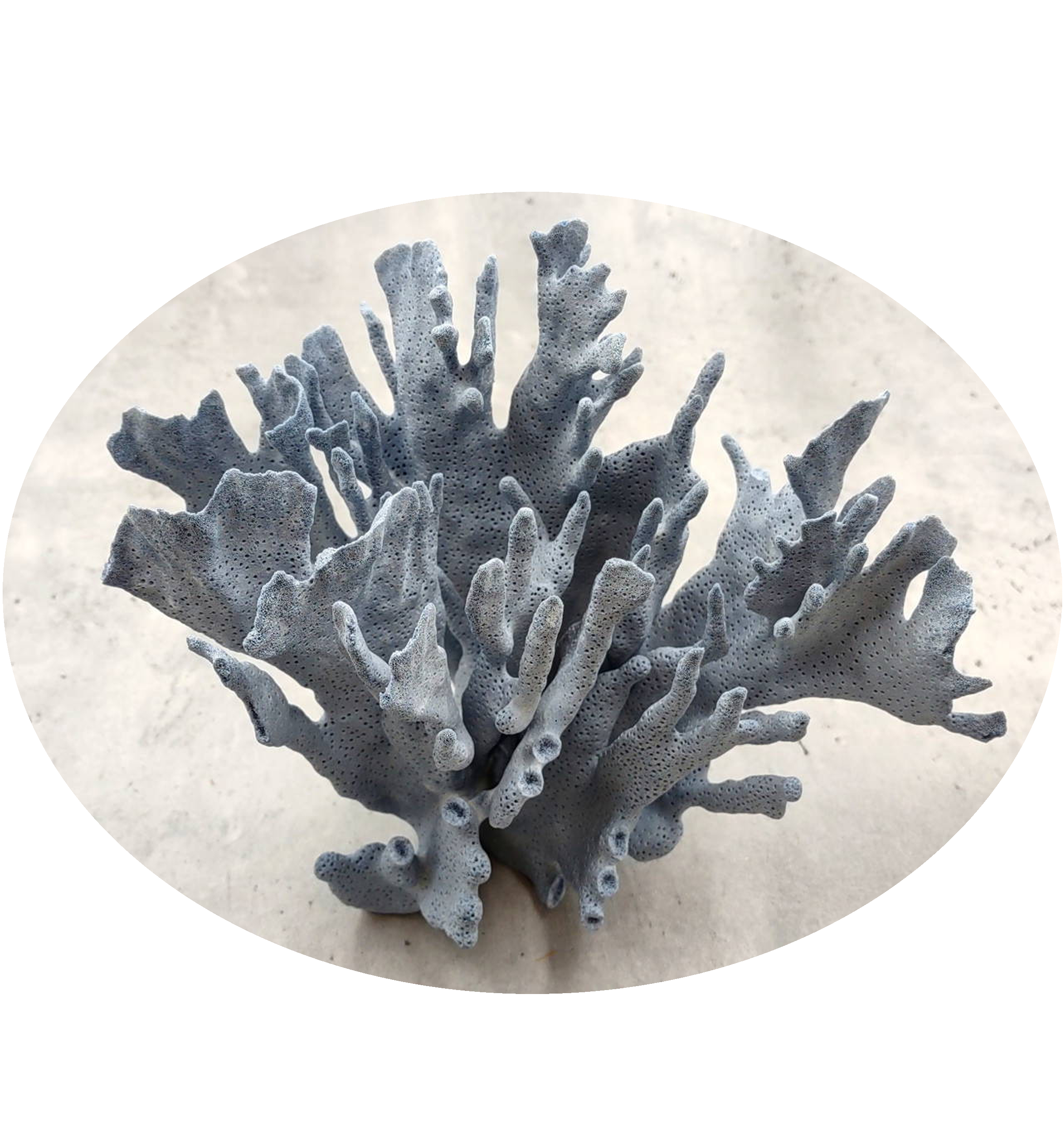
Heliopora coerulea, the blue coral, is a unique octocoral (order Helioporacea) forming a hard, massive blue calcareous skeleton—unlike the typical soft tissues or horny axes of most soft corals—found across the Indo-Pacific and representing a lineage with a fossil record extending back to the Cretaceous period. Its blue coloration comes from biliverdin incorporated into the aragonite skeleton, a feature unique among living cnidarians, and it harbors Symbiodiniaceae photosymbionts as a reef-building organism within Octocorallia. Genomic data have been generated for this species and are available in public databases, enabling comparative studies of cnidarian evolution and ecology.