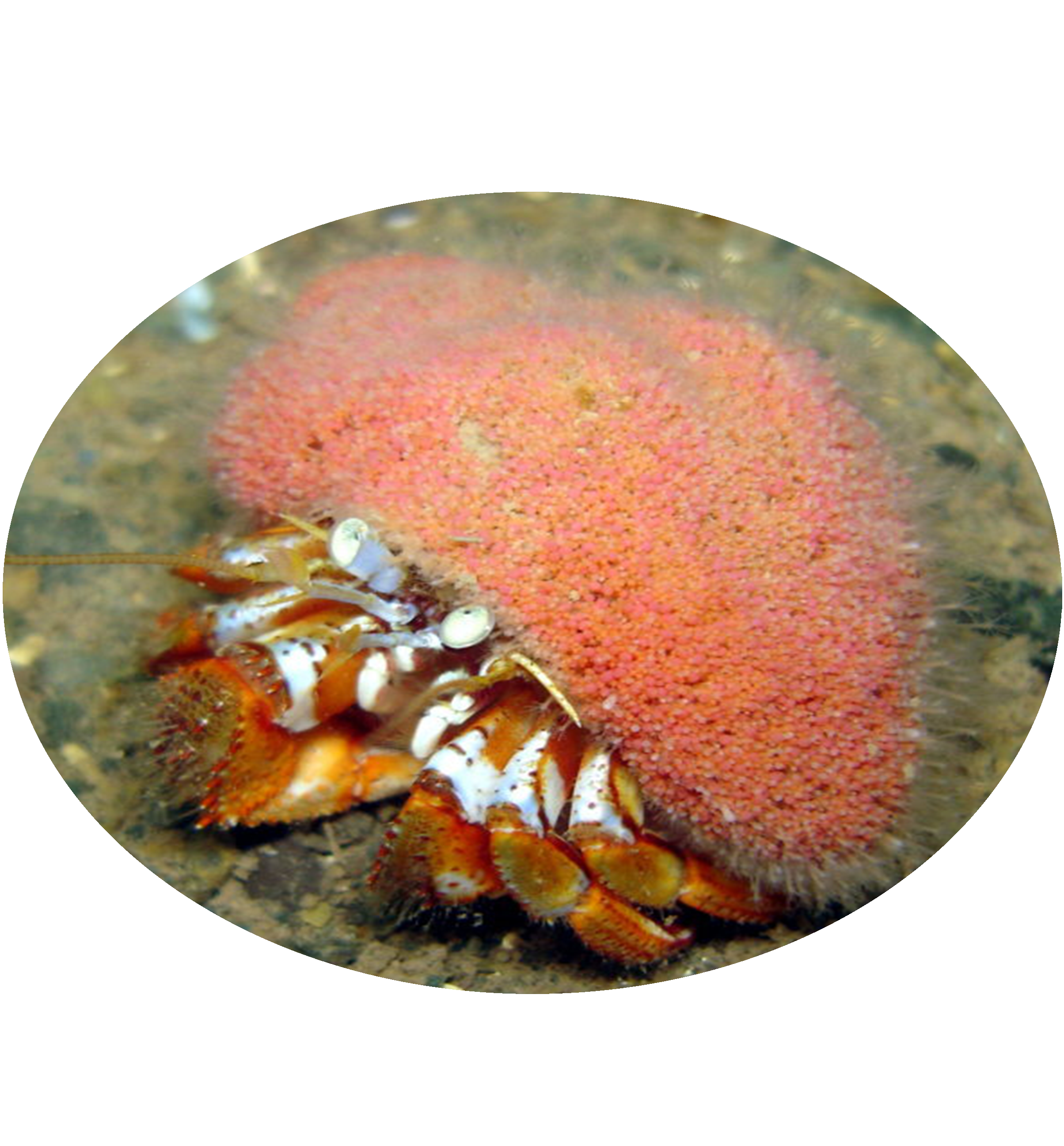
Hydractinia echinata is a colonial hydrozoan (family Hydractiniidae) growing on hermit crab shells in temperate North Atlantic waters, an important model organism for studying cnidarian stem cell biology, coloniality, and allorecognition—the ability of colonial organisms to distinguish self from non-self when two colonies come into contact. The species has totipotent interstitial stem cells (i-cells) that can differentiate into any cell type including gametes, neurons, nematocytes, and gland cells. Research on Hydractinia stem cells has significant implications for understanding stem cell evolution and regenerative medicine. Genomic data have been generated for this species and are available in public databases, enabling comparative studies of cnidarian evolution and ecology.