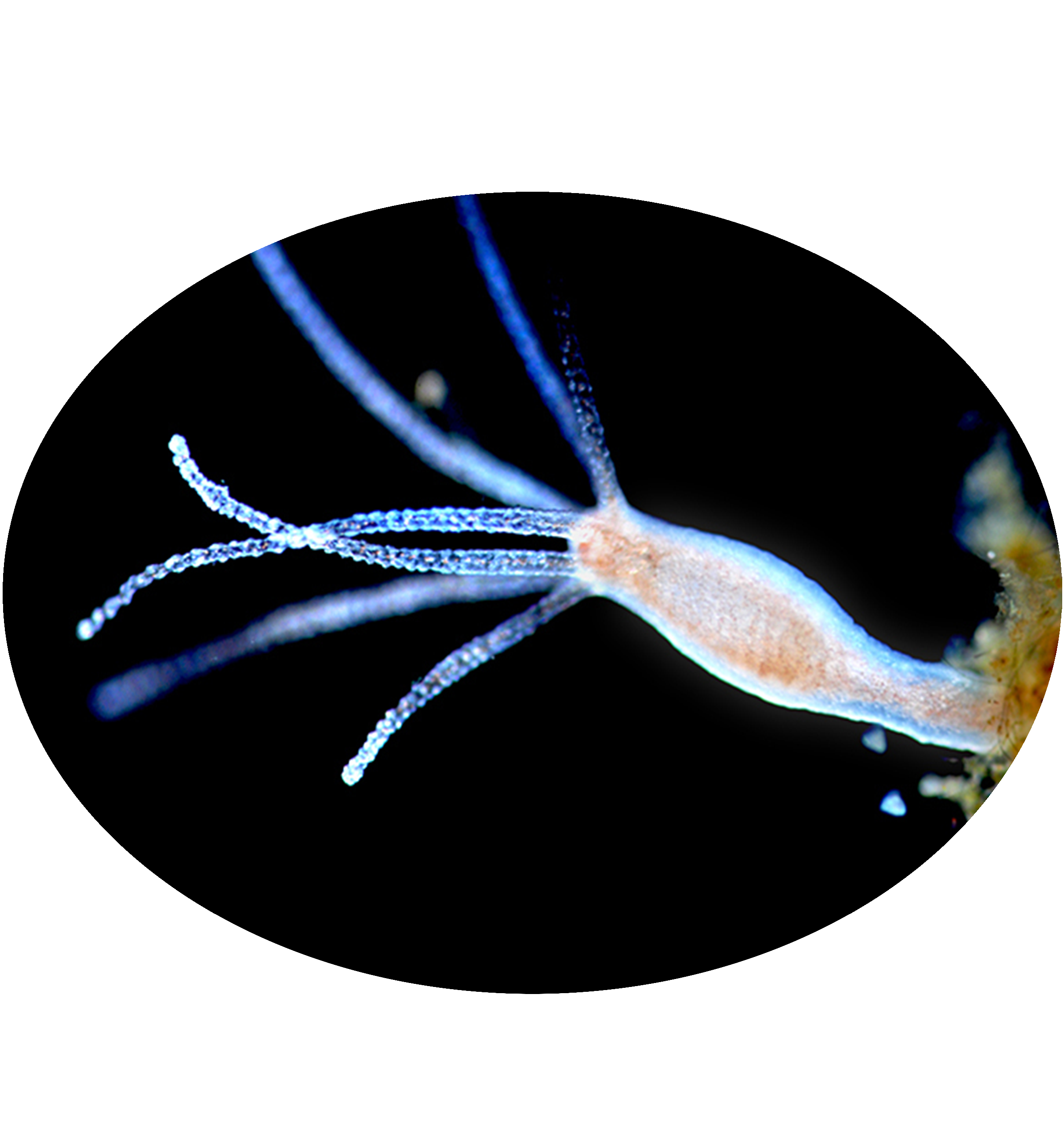
Hydra vulgaris is the classical model organism of cnidarian biology (family Hydridae), a small freshwater polyp famous for its extraordinary regenerative capacity and apparent biological immortality under laboratory conditions. Its genome was among the first cnidarian genomes sequenced (2010), revealing unexpectedly complex gene content including many genes shared with vertebrates but absent from other invertebrates, reshaping understanding of animal genome evolution. The species continuously renews its cells through stem cell proliferation at the body column, and isolated cells can reaggregate to form functional organisms. A telomere-to-telomere complete genome assembly was published in 2024, the first T2T assembly for any cnidarian. Hydra vulgaris remains central to research on regeneration, stem cell biology, aging, and cnidarian innate immunity.