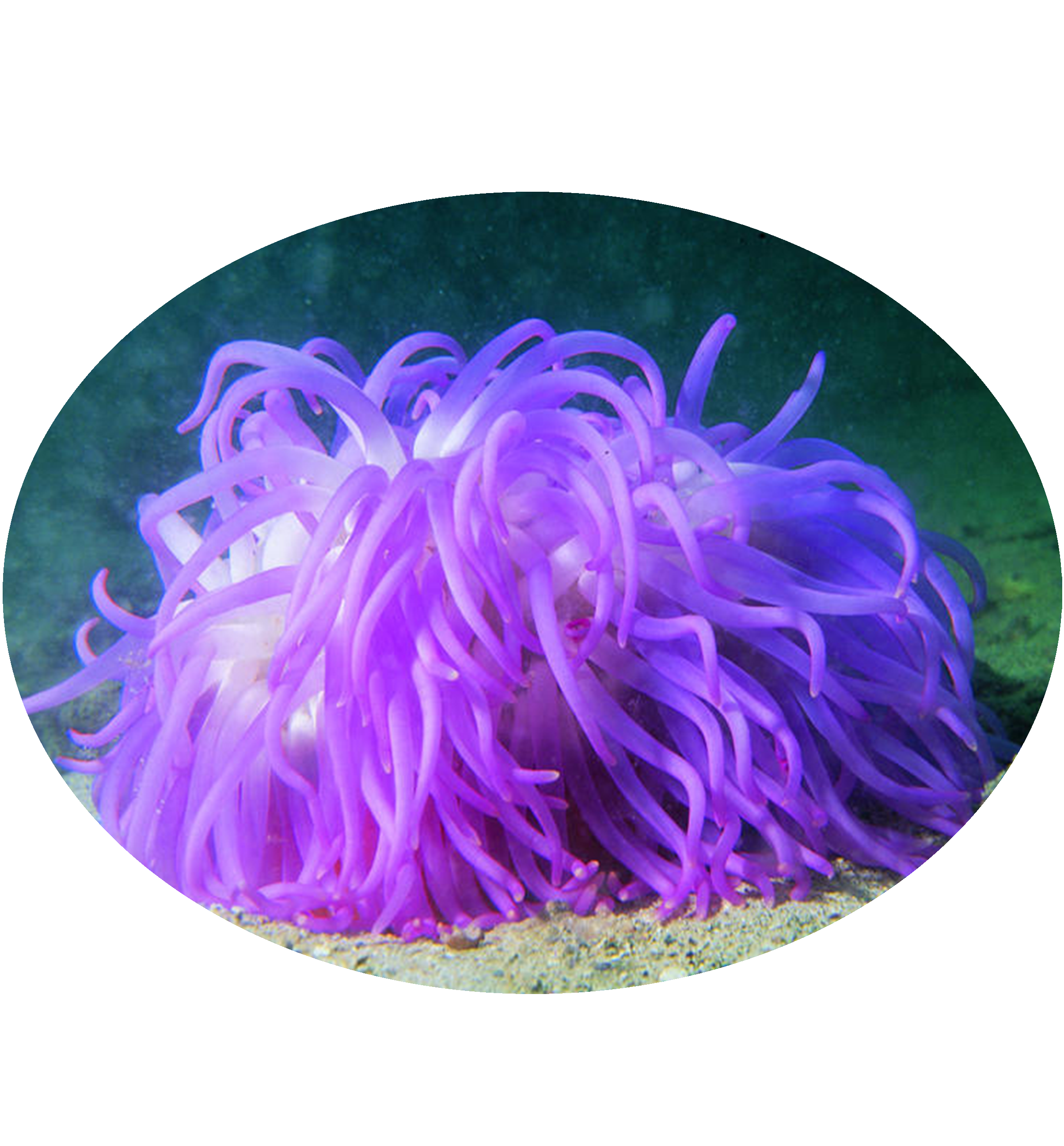
Heteractis doreensis (formerly Macrodactyla doreensis) is a large, photosynthetic host sea anemone (family Heteractidae) widely distributed across the shallow, sandy substrate and coral reef flats of the tropical Indo-West Pacific. Morphologically, the species is characterized by an expansive oral disc, typically spanning 20 to 30 cm and occasionally exceeding 50 cm in mature specimens, which bears long, snaky, and slender tentacles reaching up to 10 cm in length. These tentacles are densely crowded along the periphery of the oral disc but become markedly sparse or entirely absent around the central mouth, where prominent white stripes radiate outward onto the disc base. Notably, the tentacles often exhibit a distinctive tightly coiled or corkscrew morphology when submerged. The distinctive column is embedded with prominent verrucae (wart-like spots) and terminates in a bright orange to red pedal disc used for anchoring deep within sandy pockets or rubble crevices. Ecologically, H. doreensis maintains an obligate photo-symbiosis with endosymbiotic zooxanthellae for autotrophic energy production and serves as a vital mutualistic refuge for numerous symbiotic invertebrates and anemonefishes, such as Amphiprion chrysopterus and Amphiprion clarkii. Recent mitogenomic sequencing has fully assembled its circular mitochondrial genome (20,720 bp), providing robust molecular datasets for resolving evolutionary linkages and taxonomy within the superfamily Actinioidea.