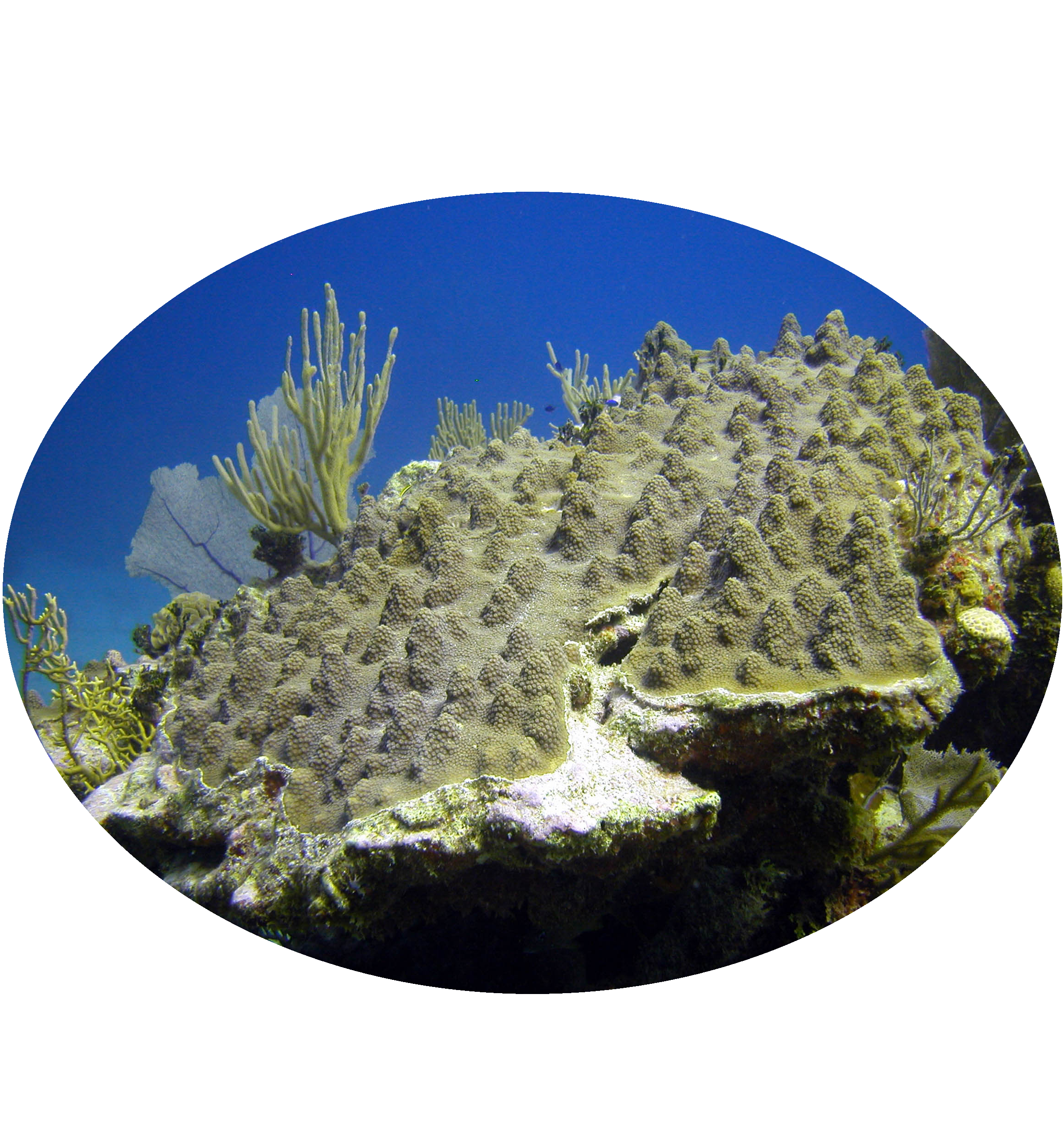
Orbicella faveolata is a massive, slow-growing hermaphroditic broadcast spawning coral (family Merulinidae) that acts as a primary reef framework builder throughout the Caribbean Sea and the Gulf of Mexico. Morphologically, it forms large, robust skeletal colonies that can attain multiple meters in diameter, exhibiting distinct growth plasticities: developing rounded domes or undulating columnar forms in calmer, deeper zones, while transitioning into flattened, shingle-like plating growth forms along wave-exposed reef edges to optimize photosynthetic light interception. Individual corallites are small (2–3 mm in diameter), evenly sized, and formed via extratentacular budding, featuring thin walls and irregularly dentated costae. Genomically, O. faveolata represents a vital cnidarian model; recent advancements utilizing PacBio long-read sequencing have successfully assembled a high-contiguity de-novo genome framework consisting of 51 contigs and containing 32,172 predicted protein-coding genes, vastly improving BUSCO completeness scores. This chromosomal asset, integrated with comparative proteomics mapping across seasonal thermal shifts, provides critical evidence regarding innate immune transcript networks, heat-tolerant algal symbiont partitioning, and functional calcification pathways under active conservation management.