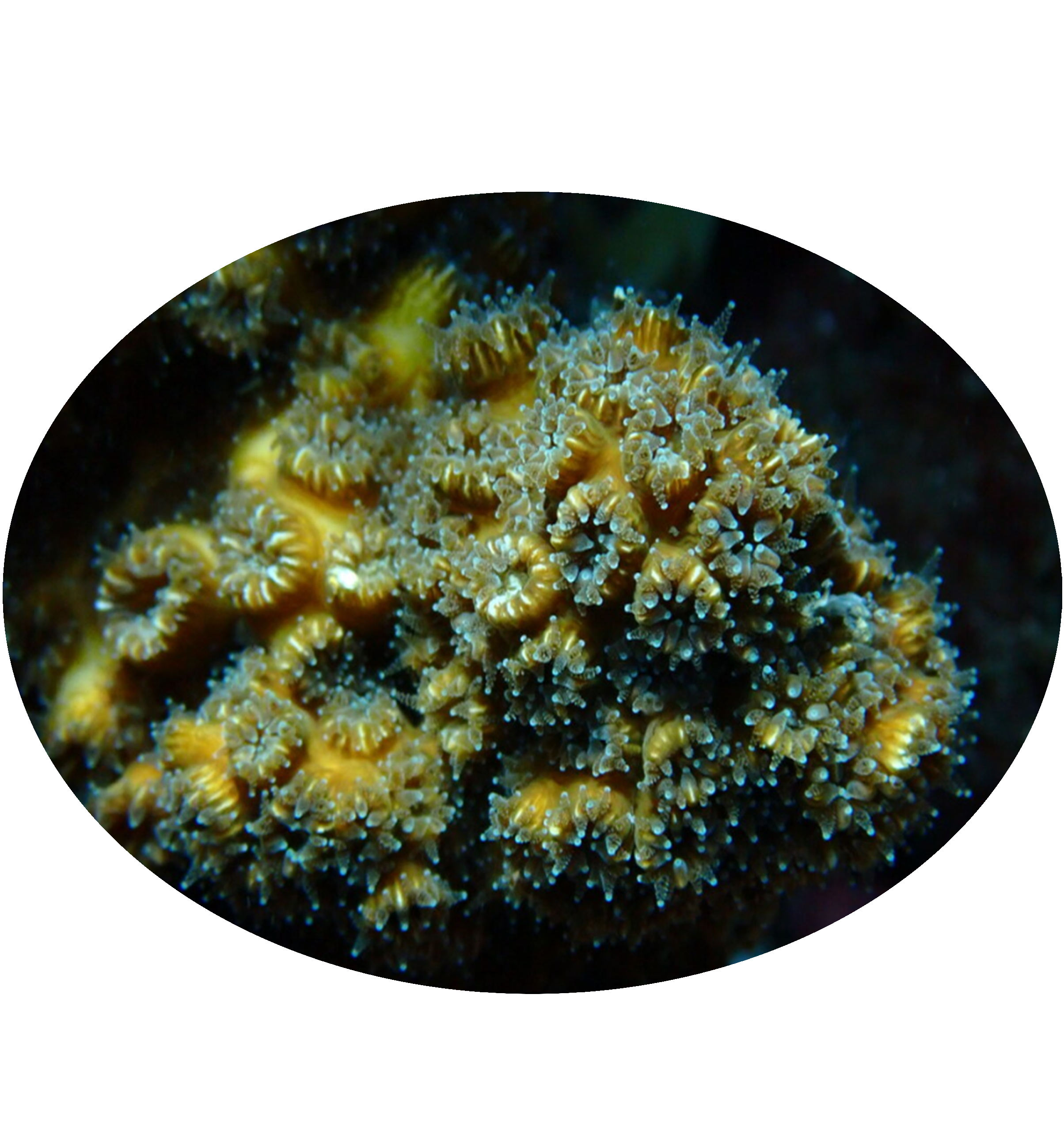
Oculina patagonica is a branching scleractinian coral (family Oculinidae) native to South American Atlantic waters but successfully introduced into the Mediterranean Sea, where it has become an established non-native species capable of surviving Mediterranean bleaching events and forming small reef-like structures on rocky substrates. The species alternates between zooxanthellate and azooxanthellate states under different environmental conditions, making it a useful model for studying the flexibility of cnidarian-algal symbiosis in response to stress. Genomic data have been generated for this species and are available in public databases, enabling comparative studies of cnidarian evolution and ecology.