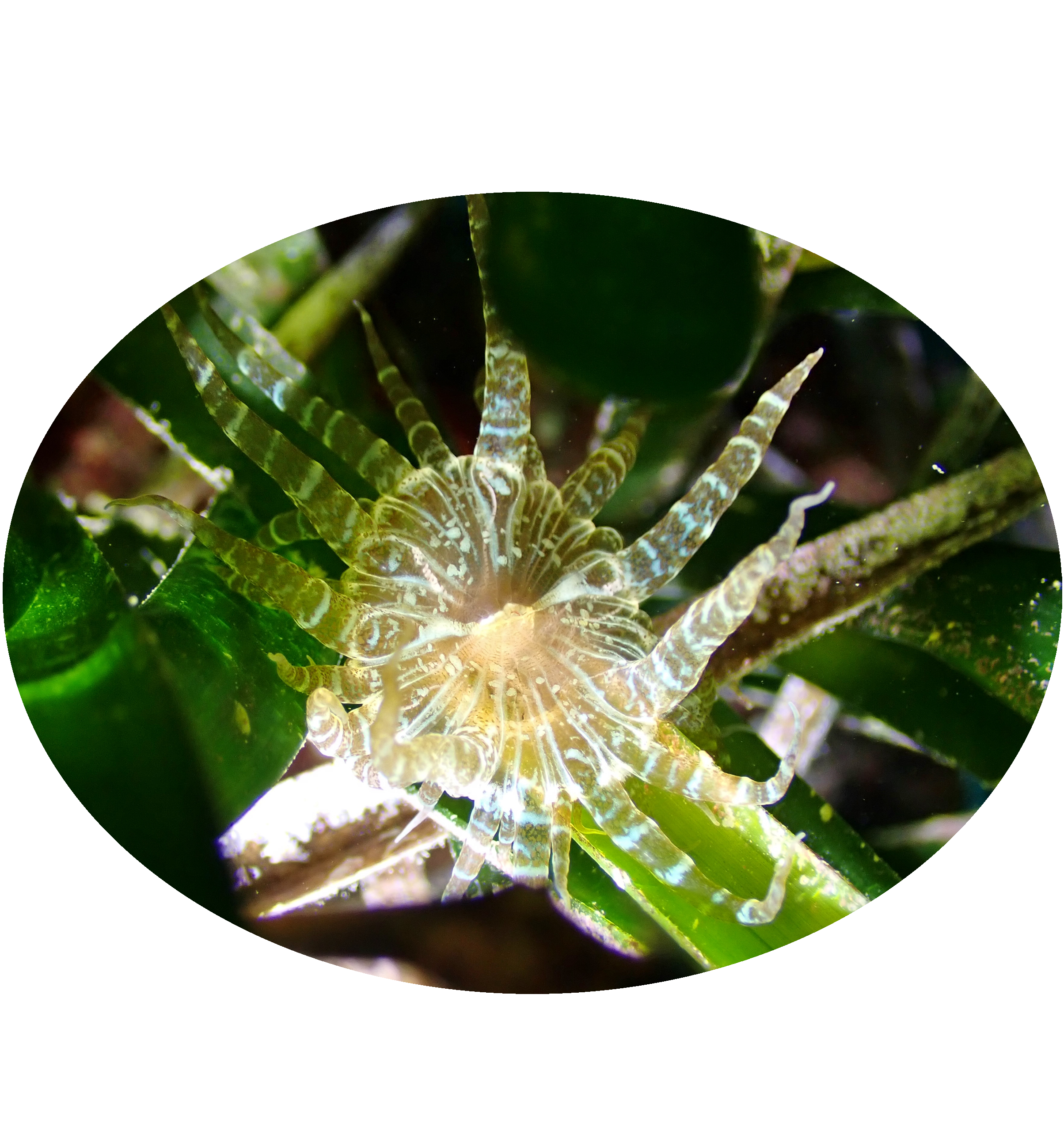
Paranemonia cinerea is a small photosymbiotic sea anemone (family Verrillactiniidae) found in seagrass beds and shallow rocky habitats of the Mediterranean Sea and eastern Atlantic, living partially buried in soft sediments or attached to seagrass rhizomes. Uniquely among Mediterranean anemones, it harbors Symbiodiniaceae photosymbionts providing significant nutritional input in well-lit shallow habitats. It is studied as a model for the diversity of photosymbiotic associations in temperate sea anemones. Genomic data have been generated for this species and are available in public databases, enabling comparative studies of cnidarian evolution and ecology.