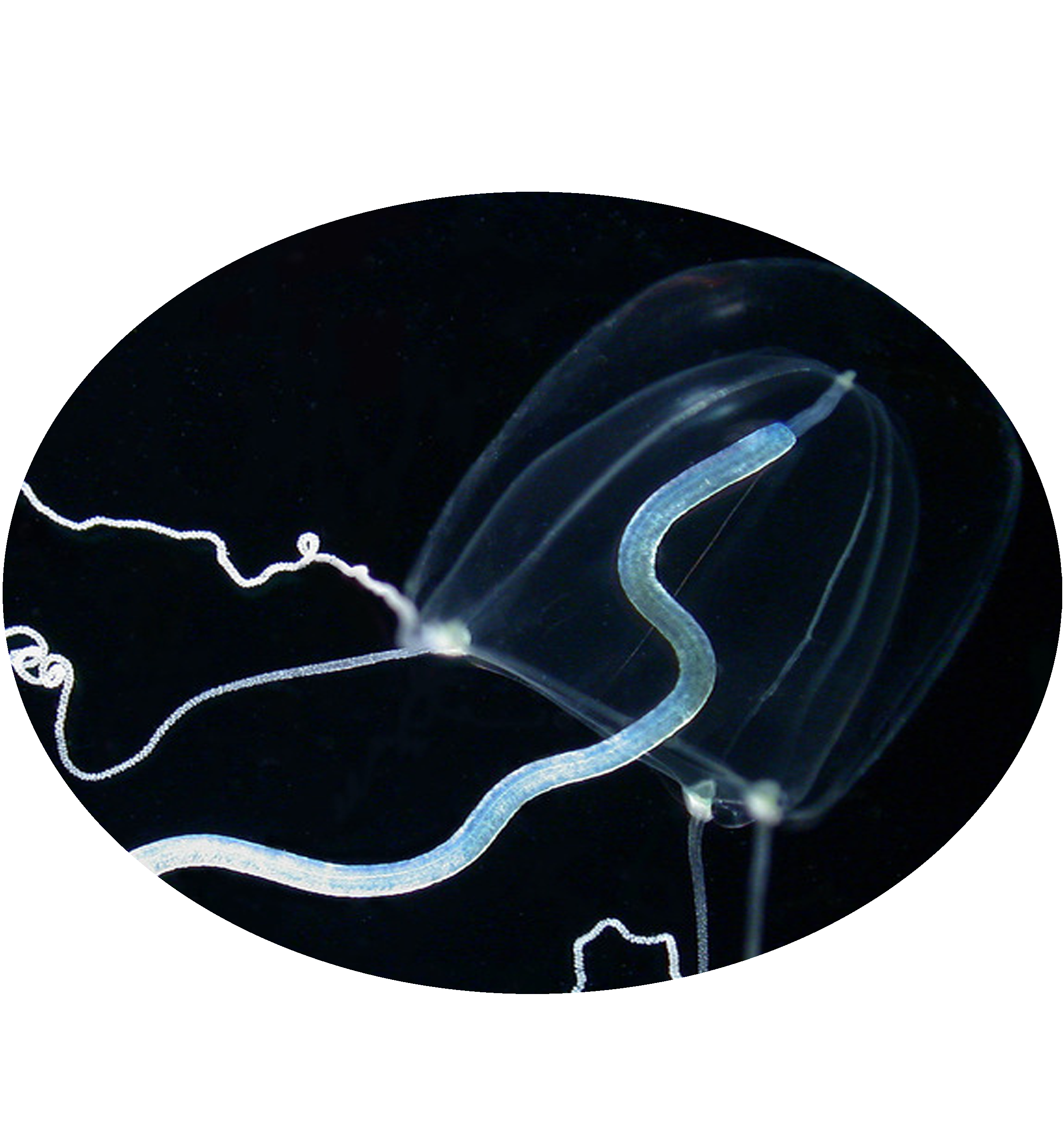
Sarsia tubulosa is a hydrozoan medusa (family Corymorphidae or Tubulariidae) found in cold temperate and boreal coastal waters of the North Atlantic, with a simple, transparent bell bearing four radial canals and a distinctive long, pendant manubrium for capturing copepod prey. The species is a model for studying hydrozoan medusa development and the control of sexual reproduction by neuropeptides. Sarsia hydromedusae have been used in classical studies of cnidarian neurobiology and reproduction physiology. Genomic data have been generated for this species and are available in public databases, enabling comparative studies of cnidarian evolution and ecology.