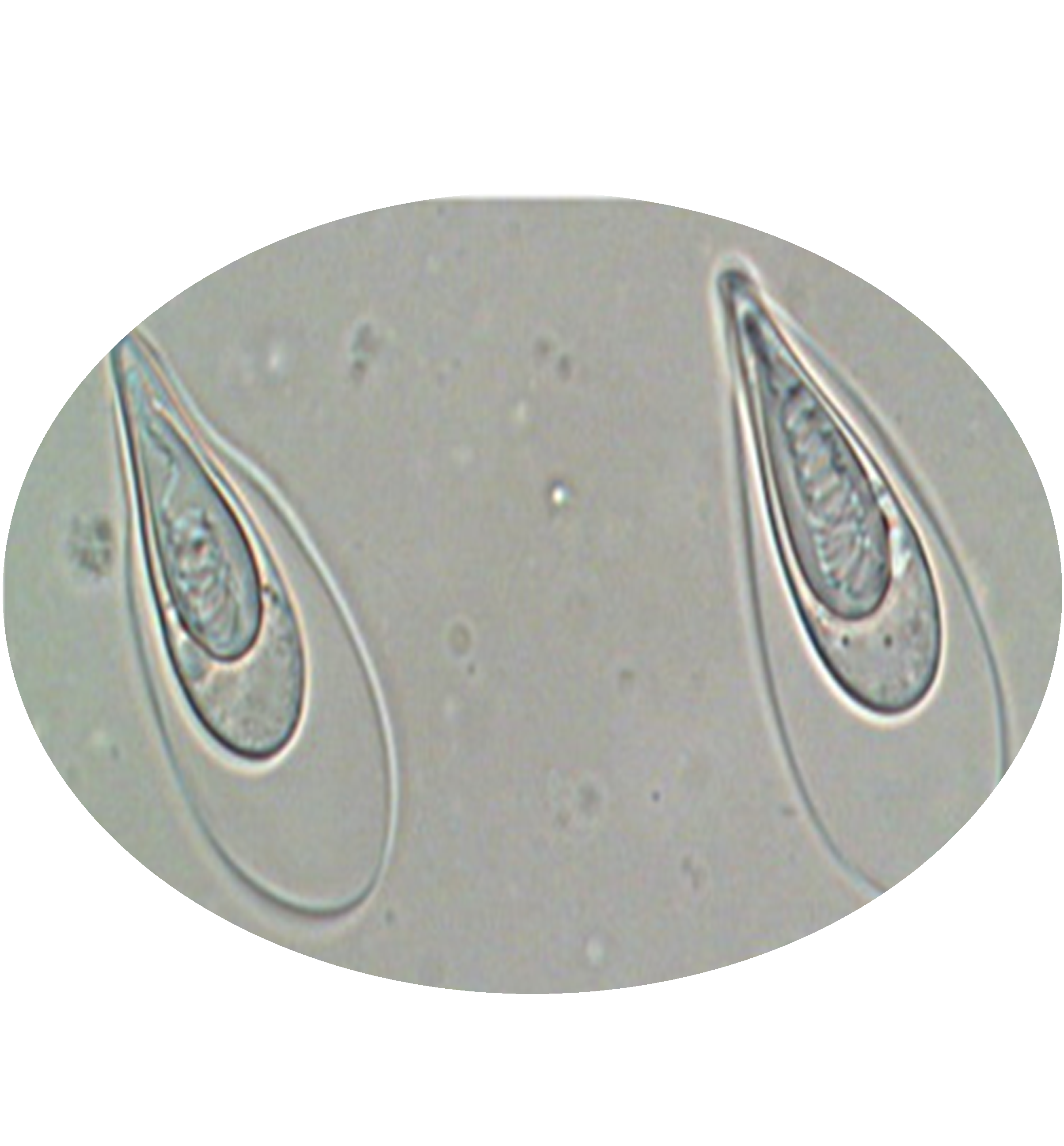
Thelohanellus kitauei is a freshwater myxozoan parasite (family Myxobolidae) infecting the intestinal wall of common carp (Cyprinus carpio) in East Asia, causing intestinal thelohanellosis characterized by large, visible cysts in the gut wall that cause significant morbidity and mortality in infected fish, particularly in Chinese and Japanese carp aquaculture. Its genome revealed extensive gene loss and metabolic pathway reduction consistent with obligate intracellular parasitism.
| Class | Species | NCBI Taxonomy ID | Assembly Level | GenBank Assembly | Assembly Name | Genome Size (Mb) | WGS Accession | Submitter | BioProject |
|---|---|---|---|---|---|---|---|---|---|
| Myxozoa | Thelohanellus kitauei | 669202 | Scaffold | GCA_000827895.1 | ASM82789v1 | 143.38 | JWZT01 | Chinese Academy of Agricultural Sciences (CAAS) | PRJNA193083 |
| Chromosome Number | Scaffold Number | Contig Number | Protein Number | Protein-Coding Gene Number | Contig N50 | Scaffold N50 | GC content (%) | BUSCO completeness |
|---|---|---|---|---|---|---|---|---|
| - | 5757 | 15632 | 15020 | 15020 | 13033 | 149756 | 31 | C:8.7%[S:7.9%,D:0.8%],F:1.8%,M:89.5% |
| Title | Journal | Pubmed ID |
|---|---|---|
| The genome of the myxosporean Thelohanellus kitauei shows adaptations to nutrient acquisition within its fish host. | Genome biology and evolution | 25381665 |