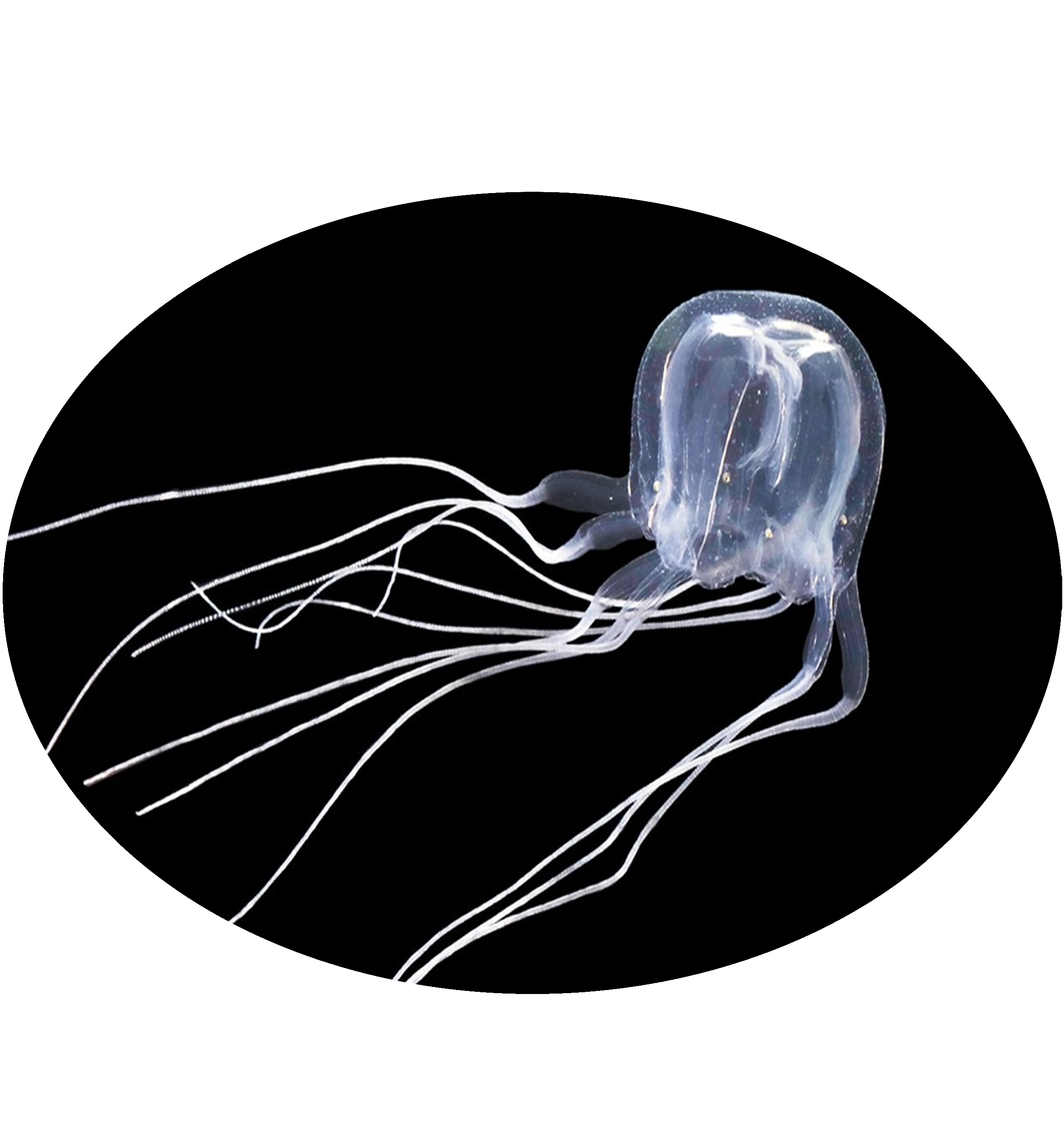
Tripedalia maipoensis is a small cubozoan box jellyfish (family Tripedaliidae) found in shallow mangrove and lagoon habitats of the Indo-Pacific and Caribbean, characterized by a small, cube-shaped bell bearing three pedalia per corner, each with a single tentacle, and complex multi-lens eyes capable of spatial vision. The species was the subject of pioneering research on cubozoan visual ecology demonstrating that box jellyfish can use their sophisticated eyes to navigate through mangrove prop roots. Genomic data have been generated for this species and are available in public databases, enabling comparative studies of cnidarian evolution and ecology.